A Thousand Cloys Anomalies and Secrets on Kalahari
Study Klein fog, Tesson milestones, pulsating fields, menhirs, and doors—light spoilers, no ending dump.
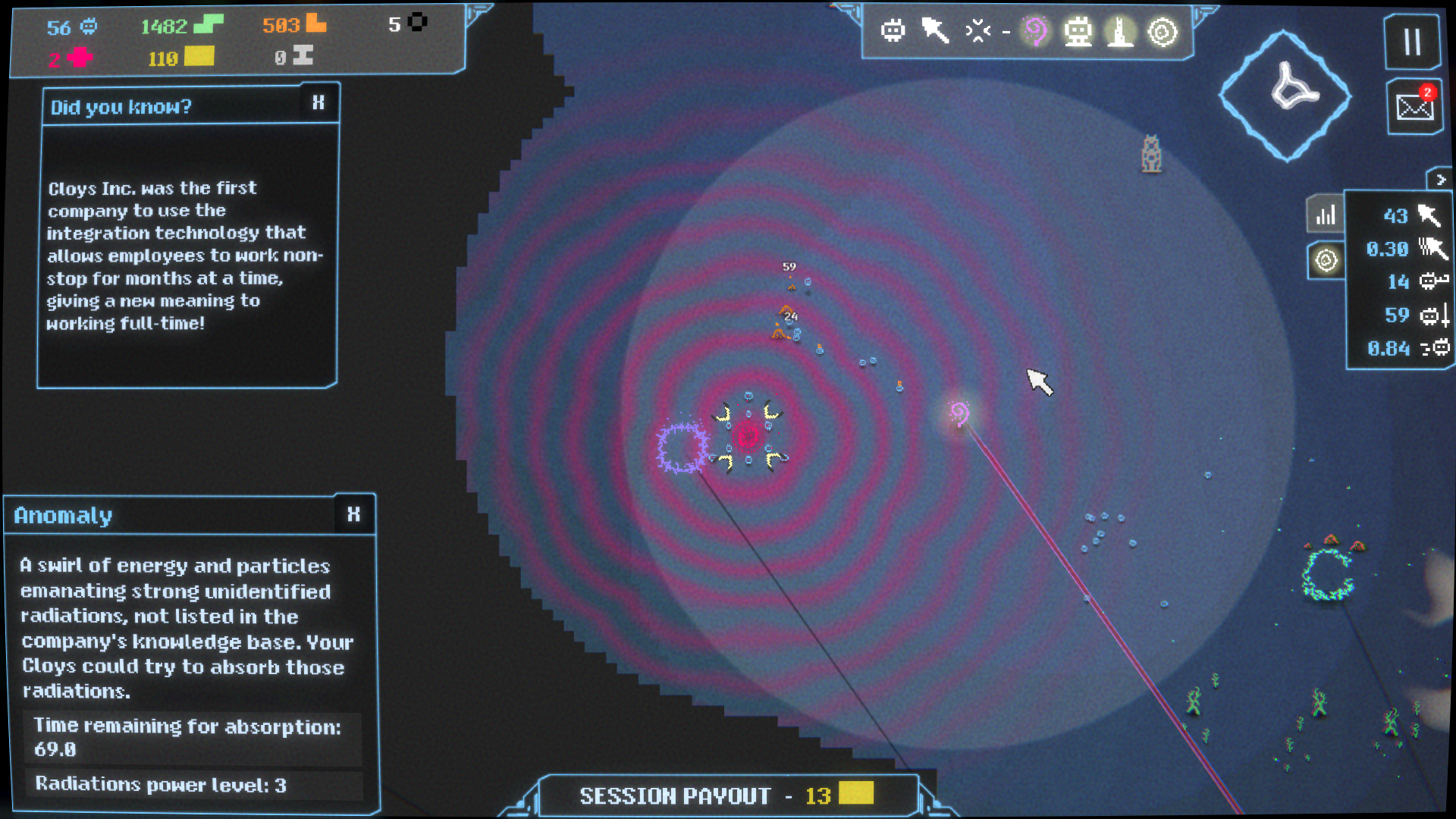
Mysteries that are also progression
A Thousand Cloys hides half its power in weird silhouettes. Studio 3-50 (Grhyll) fills planet Kalahari with Klein radiation fog, study targets, repaired oddities, and world-locked talent nodes so exploration is not sightseeing—it is how you become a better harvesting machine. This page covers anomalies and secrets at a light spoiler level: enough to know what to poke, not a late-ending dump.
Release context: Steam App 3861740, November 23, 2026, about $7.99 (intro near $7.19), Windows single-player, English and French, roughly 15–25 hours. Demo saves carry over.
Read this after the Early Walkthrough and alongside the Exploration Guide. Funding discoveries still needs Upgrade Tree, Buildings & Beacons, Cloys & Resources, and Prestige & Sessions. Hub map: Guides Hub.
Klein radiation fog is the first secret door
Fog is not wallpaper. It blocks pathing, hides regenerators, and cloaks the physical upgrade tree. Your tools are beacons, scent range, and a workforce with enough heat to work the pocket once coverage exists. Players who treat fog as a combat wall stall; players who treat it as a zoning puzzle advance.
Anomaly-minded fog habits:
- Clear a pocket, stabilize income, then edge until a new silhouette appears.
- Prefer contiguous scent over isolated islands you cannot supply.
- After every fog bite, ask what new verb the tile gave you—harvest color, study prompt, build stake, or upgrade node.
If Cloys idle at blackness, you need range or an Alpha reposition more than another unit order. Early rhythm: Early Walkthrough; map theory: Exploration Guide.
Klein Tesson as a milestone, not a footnote
Early Klein crystal harvests funnel toward the Klein Tesson—a named radiation / study milestone that marks the jump from “clear the welcome zone” to “the planet is talking back.” Treat Tesson progress as a campaign beat:
- Stockpile with intent instead of vanity swarm spending.
- When Tesson-related study or construction appears, pause and finish it.
- Expect richer anomaly density after the Tesson is online: fields pulse harder, menhirs matter more, doors stop feeling like random props.
You do not need full lore dumps. You need the Tesson unlocked so later anomaly verbs are funded and legal. Resource logistics for the grind sit on Cloys & Resources.
Pulsating fields: permanent bonuses on purpose
Pulsating fields are prime secret-adjacent structures. Store and creator coverage frame them as sites you study, build on, or upgrade for permanent bonuses—the kind of gains that survive session endings better than a temporary toaster census.
How to approach a field without spoiling yourself:
- Bring scent coverage so Cloys and builds can reach it.
- Read the tooltip—do not invent a ritual the UI never asked for.
- Finish the study / repair / upgrade action when the session can afford the stockpile.
- Plan a prestige soon after if the permanent wants to apply on the next restart.
Fields reward curiosity plus accounting. A glowing tile you ignore is free power left on the table; a field you rush without scent is a stuck stake. Construction order context: Buildings & Beacons.
Monoliths and menhirs
Monoliths / menhirs are study targets—tall, quiet, and easy to walk past if you only chase ore. Treat them as:
- Landmarks for Alpha beacon planning (cluster logistics near meaningful rocks).
- Soft gates for understanding a biome before doors open cleanly.
- Candidates for repair or data actions once your session heat and coverage catch up.
Light spoiler rule: if a stone structure highlights, pulses, or offers a study prompt, spend the click. Exact narrative payoffs stay in-game; this wiki only insists you do not skip the interaction because it looked “cosmetic.” Screenshot-friendly menhirs also make great orientation points when fog returns after a bad Alpha swing.
Mysterious doors without ending dumps
Mysterious doors are progression gates, not hour-one checklist items. Early mid-game advice:
- Note the door when fog first reveals it.
- Keep pushing economy—Enhancement Centre heat, amplifiers, scent—until the door’s requirements stop feeling absurd.
- Return on a dedicated session with a payout plan instead of soft-locking your first prestige on a wall.
We will not list late keys, final chambers, or ending branches here. If a creator video or friend spoils a finale, that is on them; this page’s job is to tell you doors matter and that under-heated Cloys will bounce. When you are ready for deeper map pushes, re-read the Exploration Guide and bank permanents via Prestige & Sessions.
Anomaly study and repair as a gameplay verb
Anomalies are not a separate minigame bolted on. Studying and repairing them is how Kalahari converts mystery into stats:
- Study reveals what the oddity wants (resources, heat threshold, beacon proximity).
- Repair / build turns the oddity into a working permanent or local multiplier.
- Upgrade paths on some sites stack with outpost spending after you cash a session.
Focus shortcuts help: snap Cloys onto the anomaly stake while a lean team keeps Climb regenerators printing (Tips & Shortcuts / Controls). If repair progress crawls, check heat before blaming the mystery.
Beacon rotate, data, and unlock chatter
Beacons do more than smell like bread. As you rotate, relocate, and upgrade coverage, expect data-style unlocks—new UI hints, shortcut strips, and permission to interact with sites that were previously gray. Practical habits:
- Cycle beacons with B so you always move the intended relay.
- After an Alpha move, re-scan the HUD for new tooltips or study prompts that just unlocked.
- Treat “beacon data” moments as exploration rewards equal to ore; they often legalize the next anomaly verb.
Scent-first build order still applies: range and Alpha placement make anomaly sites legal before you dump stockpiles into them (Buildings & Beacons).
Exploration-gated upgrade nodes
The loudest secret in A Thousand Cloys is structural: upgrade-tree nodes live in the world. Fog, doors, fields, and menhir corridors are how you find them. You cannot menu-buy a talent you never unearthed.
Discovery loop:
- Push fog / clear a gate until a tentacular node appears.
- Secure scent so workers and builds reach it.
- Harvest enough value to afford the unlock after payout rules allow.
- End the session when the permanent should apply on the next restart.
Early nodes near the portal teach the fantasy; mid nodes cluster near anomaly geography; late nodes hide behind tougher heat and door checks across the 15–25 hour estimate. Spending judgment: Upgrade Tree. Never bankrupt a run one tile before a node becomes reachable.
Session planning for secret hunters
Mix one mystery goal with one economy goal every run:
- Short session: study one menhir or start a field upgrade, milk Climb nodes, cash out for a logistics permanent.
- Standard session: Alpha toward a door or field cluster, finish a repair, unearth one tree node, prestige.
- Deep session: chain biomes, rotate beacon data unlocks, fund multiple permanents—still without forcing ending spoilers.
Remember session Cloys vanish on cash-out; anomaly permanents and outpost buys are what remain. That split is why secret hunting and prestige are the same hobby.
Soundtrack tip while you explore
If you record anomaly footage, mind the press-kit warning about false YouTube claims on public-domain toaster arrangements. Creators often mute music for uploads—see Soundtrack under Updates. Community links and storefront facts live under Links and Launch Day.
Keep the wiki open while you poke the weird
- First hours path: Early Walkthrough
- Fog and biomes: Exploration Guide
- Scent and stakes: Buildings & Beacons
- Heat and Climb: Cloys & Resources
- Node funding: Upgrade Tree
- Cash-out timing: Prestige & Sessions
- Full-game sites named by achievements: Kalahari Landmarks
- Official unlock lines: Achievements
- Index: Guides Hub
Lift Klein fog on purpose. Finish the Tesson beat. Build on pulsating fields. Study menhirs. Note doors until you are ready. Rotate beacons for data unlocks. Unearth upgrade nodes in the dirt. Keep endings for your own playthrough—Kalahari’s best secrets are the ones your toasters earn.
Frequently Asked Questions
Quick answers to the most common questions.
What is the Klein Tesson in A Thousand Cloys?
It is an early mid-game Klein radiation / study milestone fed by crystal-style harvests. Finish the Tesson beat before treating deeper anomalies as your main focus.
What should I do with pulsating fields?
Bring beacon scent into range, read the tooltip, then study, build, or upgrade the field. Many grant permanent bonuses that matter across sessions.
Are monoliths and menhirs just decoration?
No. Treat them as study and orientation landmarks. Interact when they highlight or offer repair prompts—skipping them leaves progression on the table.
When should I open mysterious doors?
Note them early, then return when heat, scent, and session power catch up. Do not soft-lock your first prestige on a door you cannot fund yet. This guide avoids late ending spoilers.
Why can’t I buy some upgrade-tree nodes yet?
Many nodes are exploration-gated. Push Klein fog, clear anomaly routes, and unearth the physical talent in the world before session money can buy it.