A Thousand Cloys Exploration Guide for Kalahari
Push Klein fog, relocate Alpha beacons, and unearth upgrade nodes across acid lakes and monoliths.
Why exploration is half the incremental
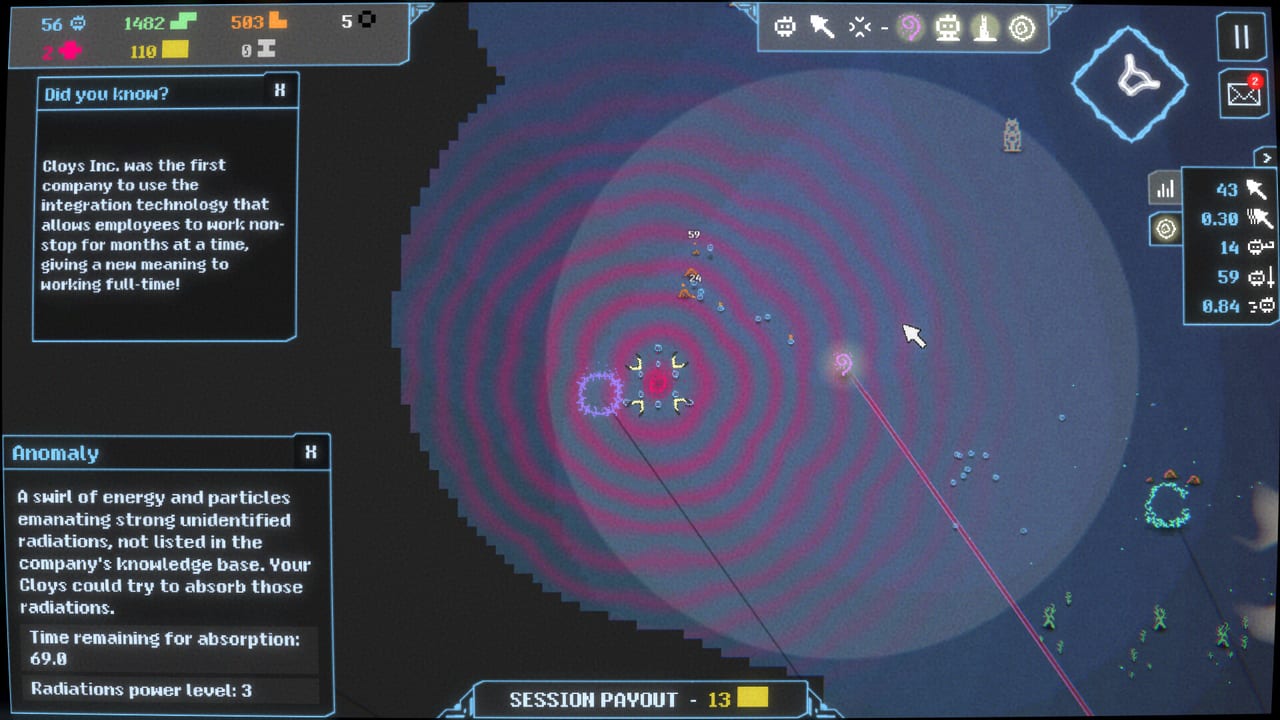
Most incrementals hide the talent tree in a menu. A Thousand Cloys hides it in the dirt. On planet Kalahari, Klein radiation fog cloaks mountains, acid lakes, mysterious doors, monoliths, pulsating fields, and the upgrade-tree nodes that permanently change your economy. Studio 3-50 built exploration as progression: lift fog, study oddities, repair or build on them, and become a better harvesting machine.
Use this guide after Getting Started and alongside How to Play. When you need worker stats, jump to Cloys & Resources; when a node needs funding, open the Upgrade Tree and Prestige & Sessions pages.
Fog of Klein radiation
Fog is not decoration. It blocks pathing, hides resources, and conceals the physical talent tree. Your tools against fog are beacons and the workforce that can operate inside cleared scent range. Pushing fog without enough Cloys wastes structures; buying Cloys without pushing fog parks a toaster traffic jam at the border.
Exploration rhythm:
- Clear a pocket with beacon coverage.
- Harvest and stabilize the pocket.
- Edge into fog until a new landmark or node appears.
- Secure coverage before chasing the next silhouette.
Steady pace beats heroic suicide pushes into blackness. Numbers stay readable when each pocket has a job.
Beacons and scent range
Beacons attract Cloys with the game’s fresh-bread scent fantasy and mark territory the swarm can trust. Early mistakes usually look like this: too many Cloys, too little radius. Flip that. Expand scent / range until existing workers stay busy, then order more units.
Beacon habits that pay off:
- Treat every range upgrade as map unlock currency.
- Re-check idle Cloys after a fog push — retarget them into the new pocket.
- Prefer contiguous coverage over isolated islands you cannot supply.
When a build site for an amplifier, Enhancement Centre project, or pulsating-field upgrade sits just outside range, prioritize the beacon spend that makes the site legal rather than grinding the wrong resource for ten minutes.
Alpha beacon moves
The Alpha beacon acts as a relay tied to your portal — a mobile-ish heart for scent logistics. Moving or re-anchoring it (when the game allows) is how you pivot the whole operation toward a richer biome without abandoning the outpost fantasy. Use Alpha moves when:
- A dense cluster of Climb regenerators or upgrade nodes appears on one flank.
- Acid lakes or mountains funnel you into a corridor that needs a forward relay.
- Your current pocket is mined out and Cloys waste travel time.
Do not relocate on impulse mid-build. Finish the structure or node claim in progress, bank a quick harvest, then swing Alpha coverage toward the next objective. Pair moves with a short active play burst so you can retarget the swarm immediately (How to Play).
Structures that turn landmarks into power
Exploration finds candidates; construction turns them into stats:
- Amplifiers — boost harvesting efficiency in covered zones once built.
- Enhancement Centre — spends resources to raise Cloy heat power, speed, and related performance.
- Beacons / relays — the fog and logistics layer.
- Pulsating fields and repaired oddities — often grant permanent bonuses once studied, built, or upgraded.
Approach weird silhouettes with curiosity, not fear. Store copy calls out monoliths, doors, and fields as things to study and improve. Light spoilers only: if it pulses, glows, or blocks a mountain pass, it probably matters to the long loop.
Anomalies, biomes, and map reading tips
Kalahari is not an empty field. Expect:
- Acid lakes — routing puzzles; plan beacon chains around shores.
- Mountains — line-of-sight and path chokepoints; scout edges before committing builds.
- Mysterious doors — progression gates; return when your session power and key structures catch up.
- Monoliths — study targets that reward attention.
- Pulsating fields — prime candidates for permanent bonus builds.
- Climb crystals / bushes — regenerating harvest points worth looping.
Map tips:
- Zoom and pan until silhouettes make sense; minimalist art still encodes gameplay.
- Mark mental priorities: regenerators for income, glowing nodes for tree unlocks, anomalies for permanents.
- After each fog bite, ask “what new verb did this tile give me?” If the answer is only “more of the same rock,” keep pushing.
Upgrade nodes live in the world
Unearthing tentacular upgrade-tree nodes is the headline exploration reward. You cannot spend session money on a node you have never found. That design forces travel. When you spot a node:
- Secure beacon coverage so Cloys and builds can reach it.
- Finish enough harvest to afford the unlock after payout rules allow.
- Decide whether to cash the session soon so the node’s permanent value applies on the next restart.
Deep spending advice belongs on the Upgrade Tree page; exploration’s job is discovery and access.
Session planning for explorers
Explorers still prestige. A beautiful fog clear with a weak payout can underfund outposts. Balance pride in map percent with Prestige & Sessions timing. Ideal explorer sessions reveal one major landmark and bank a payout that buys a permanent related to that landmark’s theme (range, heat, automation, and so on).
Demo players (1–2 hours, save carries to full game) should treat locked late zones as intentional. Do not invent file numbers or unreleased dates — check Updates and Launch Day for what 3-50 actually shipped.
Tools, controls, and community
Camera and focus shortcuts make fog work faster — see Controls. Confirm hardware on System Requirements. Share routes or ask questions via Links (Discord, Bluesky, X). If you stream exploration footage, mind the press-kit music false-strike warning.
Keep exploring with the rest of the wiki
Return to the Guides Hub for the reading order. Pair this page with Cloys & Resources whenever a newly opened biome demands tougher heat power, and with Getting Started if a friend just bought the $7.99 Steam release and needs the portal briefing.
Lift the fog on purpose. Move the Alpha beacon when the map asks for it. Study every oddity. Kalahari rewards managers who walk the planet, not only the spreadsheet.
Frequently Asked Questions
Quick answers to the most common questions.
How do I clear fog in A Thousand Cloys?
Expand beacon scent range and keep Cloys working inside the cleared pocket. Fog of Klein radiation lifts as coverage and progression allow—range usually beats raw worker count.
When should I move the Alpha beacon?
After you finish the current build or node claim, move it toward richer clusters—Climb regenerators, upgrade nodes, or a new biome corridor—then immediately retarget your Cloys.
Where are upgrade-tree nodes?
They physically exist in the world under fog and terrain. Explore to unearth them; you cannot buy what you have not discovered yet.
What landmarks matter on Kalahari?
Acid lakes, mountains, mysterious doors, monoliths, pulsating fields, and regenerating Climb crystals or bushes. Study, repair, build, or harvest them as the game permits.
Does exploration replace ending sessions?
No. Explore to find power, then end sessions to fund permanent outposts. Mix map gains with payouts—see Prestige & Sessions for timing.